
Cheap Internet Abroad: The Complete Guide for Belgian Travelers (2026)
How to get cheap internet abroad without sacrificing connection? Complete comparison: roaming, Wi-Fi, local SIM card, and eSIM — with real prices for each destination.
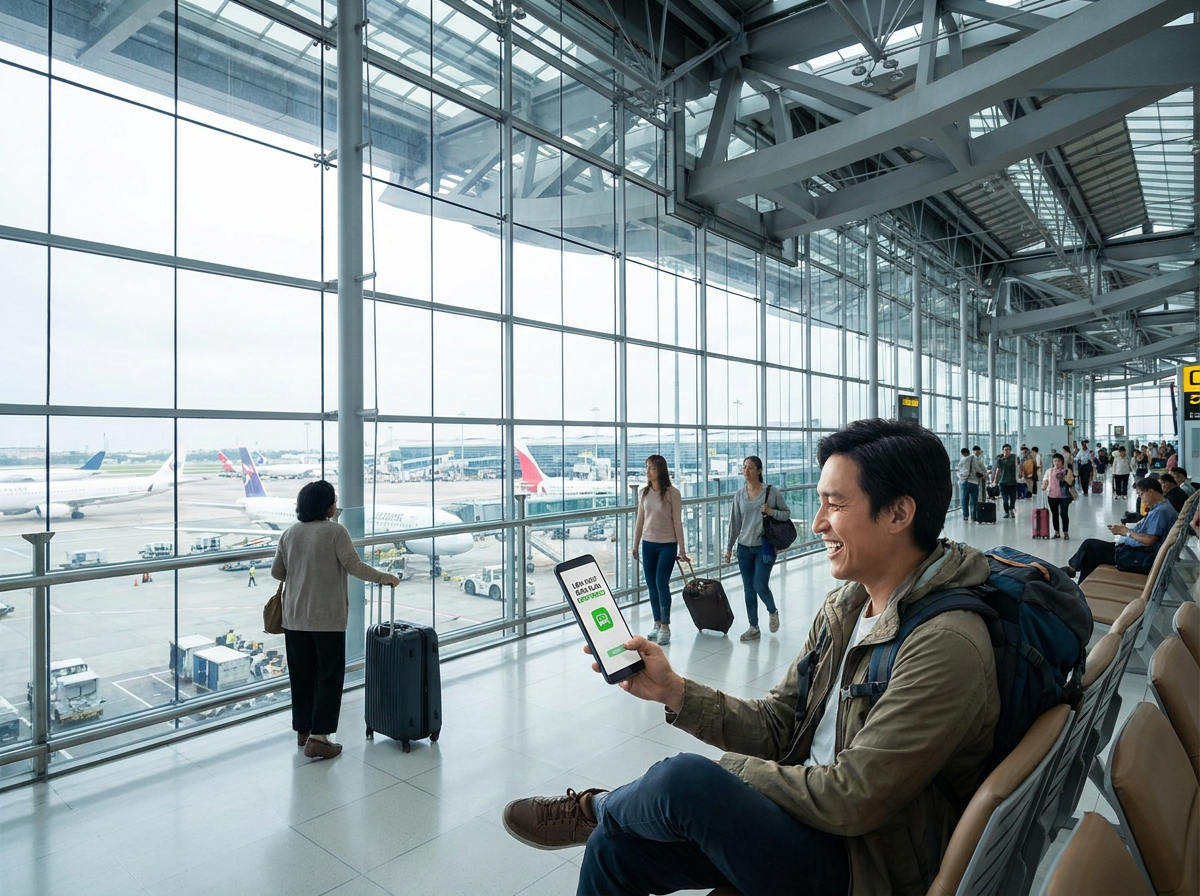
Everyone wants the same thing when they travel: to stay connected without breaking the bank. Browse freely, send photos to family, find your way, book a restaurant last minute — all without scrutinizing your data usage and without an unpleasant bill upon return.
However, getting affordable mobile connectivity abroad is not as straightforward as one might think. There are pitfalls, hidden costs, and solutions that seem economical but aren't really in practice. And there are solutions that, now in 2026, offer unbeatable value for money.
This guide gives you a complete and honest overview of all available options for Belgian travelers, with real costs and tailored recommendations for each type of trip.
The Problem with "Free" Solutions
When looking for cheap internet abroad, the first reflex is often to turn to Wi-Fi. It's logical: hotel Wi-Fi is included, cafes offer free Wi-Fi, and so do airports. On paper, it's the cheapest solution.
But "free" doesn't mean "cost-free."
The True Cost of Public Wi-Fi
Cost in comfort and time: Every time you need internet, you have to find a network, connect, sometimes identify yourself via a login page. In an unfamiliar city, between two activities, in a taxi: you don't always have the time or the opportunity.
Cost in security: Public Wi-Fi networks are not encrypted. Anyone connected to the same network can potentially intercept your internet traffic. Using a banking app or sending sensitive information on airport Wi-Fi is risky.
Cost in availability: Wi-Fi does not follow your movements. In the car, on the subway, on the beach, hiking — where you really need internet to navigate, there's no hotspot.
Conclusion: Public Wi-Fi is a useful complement, not a primary solution. Relying solely on Wi-Fi while traveling means accepting to be regularly disconnected at the wrong moment.
Option 1: Roaming via Your Belgian Operator
How it Works
Roaming is simple: your Belgian operator connects you to a partner network abroad via your existing subscription. You don't have to do anything.
How Much Does it Cost?
In Europe (EU + EEA): Thanks to the Roam Like at Home regulation, you pay the same rate as in Belgium — within a "fair use" volume limit. Beyond this volume, speed may be reduced or charges apply.
Outside Europe: This is where costs become significant.
| Destination | Without plan | With daily plan |
|---|---|---|
| United States | Several €/MB | 10–15 €/day |
| Thailand | Several €/MB | 8–12 €/day |
| Dubai (UAE) | Several €/MB | 10–15 €/day |
| Morocco | Several €/MB | 8–12 €/day |
| Turkey | Several €/MB | 8–12 €/day |
| Japan | Several €/MB | 10–15 €/day |
Real cost for a week with a daily plan:
- 10 €/day × 7 days = 70 €
- 15 €/day × 7 days = 105 €
All this for a data quantity often limited per day.
When is Roaming Justified?
- For trips within Europe with moderate usage (under your fair use limit)
- For very short trips outside the EU (1 to 2 days) where convenience takes precedence
- For professionals whose expenses are reimbursed
Option 2: The Local SIM Card
How it Works
Upon arrival in your destination country, you buy a local prepaid SIM card. You insert it into your phone (removing your Belgian SIM) and benefit from local rates.
How Much Does it Cost?
Prepaid tourist SIM rates are generally well below roaming:
| Destination | Local SIM (tourist plan) | Included data |
|---|---|---|
| Thailand (AIS/TrueMove H) | 5–15 € | 8–30 GB, 7–30 days |
| Turkey (Turkcell/Vodafone TR) | 10–20 € | 10–25 GB, 15–30 days |
| Morocco (Maroc Telecom/Orange) | 5–10 € | 5–20 GB, 30 days |
| United States (T-Mobile/AT&T) | 30–60 € | 10–50 GB, 30 days |
| Dubai (du/e&) | 8–15 € | 5–15 GB, 7–30 days |
The Disadvantages
- Your Belgian number is inactive for the duration of the stay (unless you keep two devices)
- Procedures upon arrival: finding a point of sale, possible queue, need to speak the local language
- Mandatory registration with passport in many countries (Turkey, Morocco, UAE, Thailand)
- Not suitable for multi-destination trips — you change SIM cards in each country
When is a Local SIM Card Justified?
- For long stays (4 weeks or more) in a single country
- For travelers who don't mind not being reachable on their Belgian number
- For very tight budgets over long periods
Option 3: The eSIM — The Modern Solution
How it Works
The eSIM is a digital SIM card integrated into your smartphone. You purchase a plan from an international provider like Arivia, receive a QR code by email, and install the profile directly on your phone from home. No procedures upon arrival, no physical manipulation.
How Much Does it Cost?
| Destination | Arivia eSIM (indicative) | Included Data | Duration |
|---|---|---|---|
| United States | 12–20 € | 10 GB | 30 days |
| Thailand | 12–18 € | 10 GB | 30 days |
| Turkey | 10–16 € | 10 GB | 30 days |
| Dubai (UAE) | 15–25 € | 7 GB | 10 days |
| Morocco | 8–15 € | 5–10 GB | 30 days |
| Europe (multi-country) | 8–15 € | 5–10 GB | 30 days |
Direct comparison for 7 days in the United States:
| Solution | Estimated Cost |
|---|---|
| Roaming with daily plan (10 €/day) | 70 € |
| Roaming with daily plan (12 €/day) | 84 € |
| Arivia eSIM (10 GB) | 12–20 € |
| Savings with eSIM | 50–70 € |
Complete Comparison of the Four Options
| Criterion | Wi-Fi Only | Belgian Roaming | Local SIM Card | eSIM |
|---|---|---|---|---|
| Cost (outside EU, 7 days) | Free* | 70–105 € | 5–20 € | 12–25 € |
| Your Belgian number active | No | Yes | No | Yes (dual SIM) |
| Installation before departure | Nothing | Nothing | No | Yes (10 min) |
| Availability everywhere | No | Yes | Yes | Yes |
| Security | Low | High | High | High |
| Possible hidden fees | No | Yes | No | No |
| Multi-destinations | — | Complicated | Impossible without changing | Possible |
| Ideal for | Complement | Short trip Europe | Long stay, 1 country | All trips outside EU |
*Public Wi-Fi is free in terms of money but not in comfort, security, or availability.
Tips for Minimizing Your Data Consumption
Whatever solution you choose, a few simple settings allow you to make your plan last longer.
Before You Go
1. Download offline maps. In Google Maps, download the complete map of your destination (Settings > Offline Maps). Navigation without data consumption.
2. Disable automatic updates. App Store / Play Store > Settings > Disable "Automatic app updates" on mobile data.
3. Disable cloud backup on mobile data. iCloud / Google Photos > Settings > Mobile backup only on Wi-Fi.
4. Disable background app refresh. iPhone: Settings > General > Background App Refresh > Disable on mobile data. Android: Settings > Network > Background Data.
During Your Trip
5. Use hotel Wi-Fi for heavy tasks. Streaming, downloads, emails with attachments — do it in the evening on Wi-Fi.
6. Use Google Maps in offline mode. If you have downloaded the maps, navigation consumes no mobile data.
7. Reduce video quality on social media. Instagram, TikTok, and YouTube allow you to reduce video resolution in the app settings.
Which eSIM Plan to Choose According to Your Destination?
Europe (intensive use or multi-country stay)
If your usage exceeds your fair use limit or you visit countries outside the EU like Switzerland, the UK, or Turkey, an Europe eSIM is a practical and economical solution. Recommendation: 5–10 GB.
Popular Long-Haul Destinations (United States, Thailand, Japan)
These are the destinations where eSIM offers the greatest savings compared to Belgian roaming. Recommendation: 8–10 GB for a week.
Middle East (Dubai, Abu Dhabi)
Excellent 5G coverage, VoIP restrictions to consider for calls. Recommendation: 5–7 GB for a week.
North Africa (Morocco, Tunisia)
Good mobile infrastructure in tourist areas. Recommendation: 3–5 GB for a week.
Frequently Asked Questions About Cheap Internet Abroad
Is eSIM really cheaper than roaming? Yes, systematically for destinations outside the EU and stays of 3 days or more. The savings are 50 to 80 € per week depending on the destination.
Can an eSIM be used in all countries worldwide? eSIM coverage varies by provider. Arivia covers major global tourist destinations. Check availability for your specific destination.
Is hotel Wi-Fi sufficient to do without mobile data? For stationary use (streaming in the evening, emails from the room), yes. But for navigating in the city, using Maps, booking in real-time, and communicating on the go, no.
Does my WhatsApp number change if I use an eSIM? No. WhatsApp is linked to your Belgian phone number (your physical SIM). The eSIM does not affect this number.
Is eSIM compatible with my phone? Most smartphones released after 2019 from Apple, Samsung, and Google are compatible. Check in Settings > Cellular Data or SIM: if you see "Add Mobile Plan," you are compatible.
Conclusion: eSIM is the Most Economical Solution for Connected Travel
For Belgian travelers going outside Europe, the comparison is clear: eSIM costs 3 to 5 times less than roaming with a daily plan, offers the same network quality as local operators, and has the advantage of being installed from home in ten minutes.
No compromise on connection. No surprises on the bill. Your Belgian number remains active. And you're already connected from the first step off the plane.
Discover Arivia eSIM plans for your destination and save on your next trip.