
What is an eSIM? The complete explanation for Belgian travelers (2026)
What is an eSIM? Discover how the digital SIM card works, which devices are compatible, how to install it, and why eSIM is the ideal solution for traveling without roaming fees.
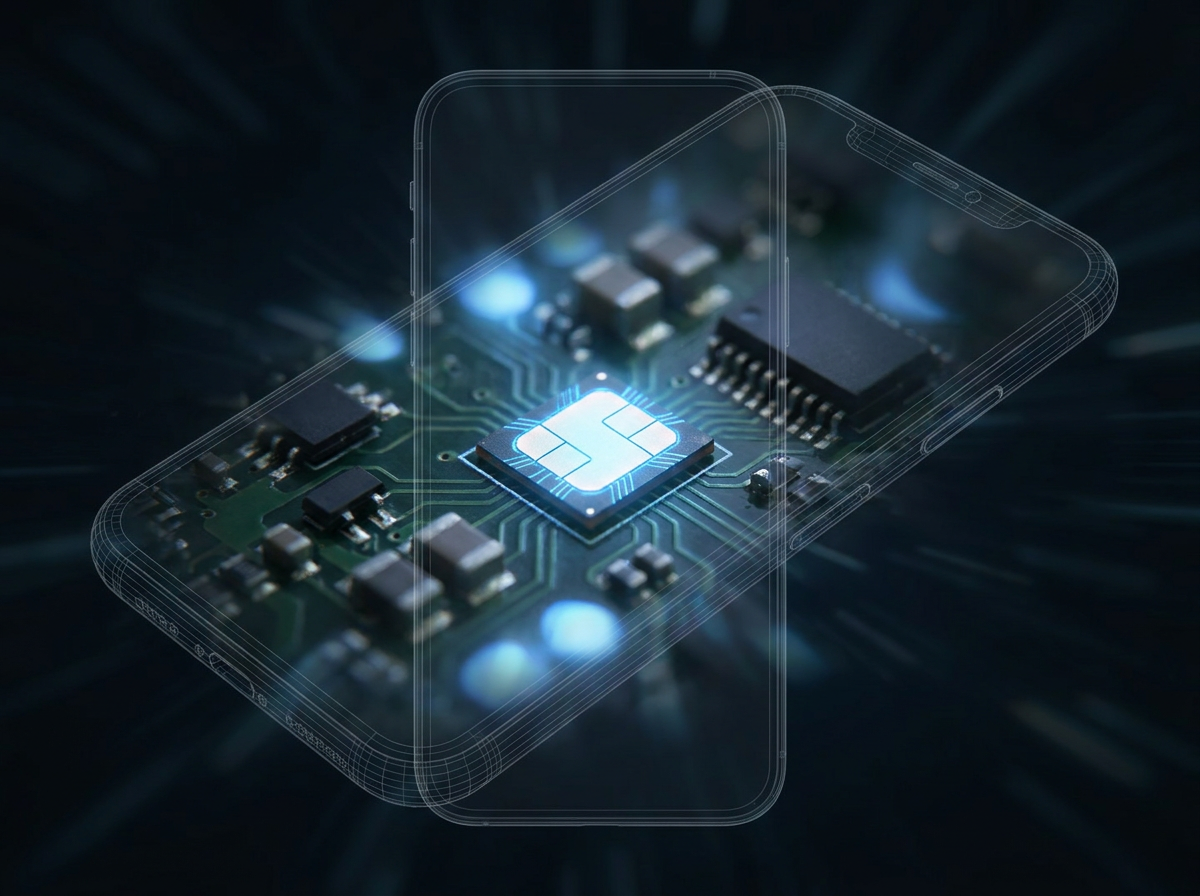
You've heard of eSIM — perhaps in an advertisement, maybe on your smartphone during an update, or because a friend told you about it before a trip. And the natural question that follows is: but what exactly is it?
eSIM is one of those technologies that seem complex from afar but, once explained simply, reveal their obvious usefulness. It's a fundamental evolution in how we connect to a mobile network — and for travelers, it's probably the most practical and economical innovation of the last decade.
In this comprehensive guide, we explain everything: the accessible technical definition, how eSIM works in practice, which devices support it, how to install it, and why it radically changes the experience of connecting abroad.
The physical SIM card: the starting point
To understand eSIM, let's start with what you already know: the classic SIM card.
A SIM (Subscriber Identity Module) card is the small plastic rectangle you insert into your smartphone. Stored on this chip are the information that identifies you to your operator: your subscriber number, network connection settings, and your plan data.
When you turn on your phone in Belgium, it reads the information from your SIM, contacts the Proximus, Orange, or Base/Telenet antennas, and you're connected. Simple, proven, reliable since the 1990s.
But this simplicity has its limits. Each operator or plan change requires a new physical card. To travel abroad with a local SIM, you have to remove your Belgian card and insert another. Only one slot, only one active SIM at a time (except on rare dual SIM phones).
eSIM: the SIM card that lives inside the phone
eSIM (Embedded SIM, technically eUICC — embedded Universal Integrated Circuit Card) is a SIM chip soldered directly onto your smartphone's motherboard during manufacturing. It cannot be removed — this is its fundamental difference from a physical SIM.
But what makes it revolutionary is that it is reprogrammable. Several different operator profiles, each corresponding to a subscription or plan, can be stored on this fixed chip. Activating a profile, changing it, or adding a new one is done entirely digitally — without physical manipulation, without tools, without going to a store.
The simplest metaphor
Imagine a physical SIM as a plastic access badge to a single company. To access another company, you must request a new badge and replace the old one.
eSIM is a universal digital badge on which you can download multiple access authorizations. You switch from one to another in seconds from your phone, without ever touching plastic.
How does a travel eSIM actually work?
Here is the complete process, from purchase to connection at your destination.
1. You buy an eSIM plan online
On the Arivia website, you choose your destination (USA, Thailand, Morocco, Europe, etc.) and the data plan suited to your stay (volume, duration). You pay online in a few clicks.
2. You receive a QR code by email
A few seconds after purchase, you receive an email containing a QR code. This code contains the eSIM profile information — the connection settings for your destination's partner network.
3. You install the profile on your phone
You open your phone's settings, go to SIM management, and scan the QR code. Your phone downloads the profile in a few seconds via your internet connection (home Wi-Fi recommended).
On iPhone: Settings > Cellular > Add Cellular Plan > Scan QR code
On Android (Samsung): Settings > Connections > SIM Card Manager > Add eSIM > Scan QR code
4. You configure dual SIM
You set your Arivia eSIM as the default data source, and you disable data roaming on your physical Belgian SIM (to avoid any accidental roaming charges).
5. You leave — and you're connected as soon as you land
Upon arrival, you disable airplane mode. Your phone automatically searches for the local partner network. Connection established. You can open Maps, call a taxi, or send a message to your family — right away, without queues, without a SIM shop.
Dual SIM: your Belgian number AND a local connection
This is the most important practical advantage of eSIM for travelers: dual SIM.
On almost all modern smartphones, you can have two active lines simultaneously:
- Your physical Belgian SIM: keeps your Belgian phone number. You can receive calls and SMS normally. WhatsApp remains associated with this number.
- Your travel eSIM: provides local mobile data at local rates.
Both work at the same time. You don't have to choose between being reachable on your usual number and having an affordable internet connection. You have both.
Which devices are compatible with eSIM?
iPhone
All iPhones since the XS model (2018) support eSIM. This includes:
- iPhone XS / XS Max / XR (2018)
- iPhone 11 / 11 Pro / 11 Pro Max (2019)
- iPhone SE 2nd and 3rd generations (2020, 2022)
- iPhone 12 to 16 and all their Pro/Plus/mini variants (2020–2024)
iPhones older than XS — iPhone X, 8, SE 1st generation — do not support eSIM.
Samsung Galaxy
Main compatible models:
- Galaxy S20, S21, S22, S23, S24 (and +/Ultra variants)
- Galaxy Z Fold 2 and later, Galaxy Z Flip and later
- Galaxy Note 20 and Note 20 Ultra
- Galaxy A54 (2023) and A55 (2024)
Older A-series models before A54 generally do not support eSIM.
Google Pixel
All models since Pixel 3 (2018) are eSIM compatible: Pixel 3, 4, 5, 6, 7, 8, 9 and all their variants.
Other brands
- Motorola: Razr (2019+), Edge+ (2020+)
- OnePlus: Models 11 and 12
- Xiaomi: Certain recent high-end models (European versions only)
How to check in 30 seconds:
- iPhone: Settings > Cellular > if you see "Add Cellular Plan" → compatible
- Android: Settings > SIM or SIM Card Manager > if you see "Add eSIM" → compatible
eSIM vs roaming: the fundamental difference
Many people think eSIM is a form of roaming. This is not the case.
Roaming: you use your Belgian subscription on a foreign partner network. Your Belgian operator is the intermediary — and takes its margin on every megabyte.
Travel eSIM: you directly purchase a data plan from an international operator (Arivia) who has direct agreements with local networks. You bypass the Belgian intermediary. You pay the local price, not the roaming price.
In practice, you access the same local networks — T-Mobile in the USA, AIS in Thailand, Maroc Telecom in Morocco — but at a price that can be 5 to 10 times lower than roaming through your Belgian operator.
How much does a travel eSIM cost?
To illustrate the cost difference, here's a concrete comparison:
| Destination | Belgian Roaming (7 days) | Arivia eSIM |
|---|---|---|
| United States | €70–105 | €15–22 |
| Thailand | €56–84 | €12–18 |
| Dubai | €70–105 | €15–25 |
| Morocco | €56–84 | €8–13 |
| Turkey | €56–84 | €10–16 |
Average savings for a week's holiday outside the EU: €40 to €90.
eSIM is also more secure
A physical SIM can be removed from your phone and inserted into another device — by you, or by someone else in case of theft.
An eSIM is soldered into the phone. It cannot be extracted. eSIM profiles are linked to your device's unique identifier (IMEI) — they cannot be used on another phone without your authorization.
What eSIM doesn't do
It's useful to clarify a few points to have realistic expectations:
eSIM does not replace your Belgian subscription. It's an additional data plan for your travels. Your Belgian subscription continues to work via your physical SIM.
A data-only eSIM does not provide a phone number. Most travel eSIMs are data-only plans — they do not assign you a local number in the destination country. For calls, you continue to use your Belgian number.
eSIM does not improve the signal in areas without coverage. If a geographical area has no mobile network (remote mountains, deep desert), eSIM will not change anything there — just like any SIM.
Frequently Asked Questions about eSIM
Is eSIM complicated to install? No. If you know how to download an app, you can install an eSIM. The process takes less than 10 minutes and is done entirely from your phone's settings.
Can you have multiple eSIMs on the same phone? Yes. Recent iPhones (13 and later) can store up to 8 eSIM profiles. You can activate or deactivate each profile depending on your destination.
Does eSIM work without Wi-Fi? After installation, yes — eSIM works via the local mobile network, without Wi-Fi. An internet connection is only needed during the initial profile installation.
What happens if I change phones? The eSIM profile is linked to your old device. To transfer it to a new phone, you must contact your provider (Arivia) who will provide you with a new QR code.
Can eSIM be used as a primary subscription in Belgium? Technically yes, if a Belgian operator offers it. But the primary use of eSIM remains travel plans — that's why Arivia specializes in this offering.
Does my phone need to be unlocked to use a travel eSIM? Yes. If your phone is locked to a Belgian operator (SIM-locked), it may block the installation of eSIMs from other providers. Request unlocking from your operator before you leave.
The future: towards eSIM-only
Apple has already launched iPhones without a physical SIM port entirely in the United States (iPhone 14 and later on the US market). In Europe, regulations still require a physical port for now — but the direction is clear.
Smartphone manufacturers are gradually removing physical SIM slots to save space, improve waterproofing, and standardize connectivity. In the coming years, eSIM will become the universal standard.
Adopting eSIM now means getting ahead of the curve — while making immediate savings on every trip outside Belgium.
Conclusion: eSIM simplifies travel
eSIM is the answer to a question every traveler asks: how can I have reliable internet abroad without paying a fortune?
No SIM to search for at the airport. No queues. No deactivated Belgian number. No surprise bill upon return. Just a 10-minute installation from your couch, a calm departure, and an automatic connection as soon as you land.
Discover Arivia eSIM plans for your next destination and experience connected travel without compromise.